

Announcing Pallet Core: Build AI agents you can trust for complex supply chain operations
 Sushanth Raman, CEO and founder
Today, we’re introducing Pallet Core, an AI platform for deploying the most advanced and reliable agents across any supply chain use case.
I’ve been grateful to have a front-row seat as AI has moved from research breakthroughs to real products. But in supply chain, we kept hearing the same thing from operators: "AI works well in our pilot, but it breaks down in production.”
Why? Agents have been unable to handle the inherent complexity of real-world supply chain operations, where tribal knowledge, domain expertise, and accuracy are needed for high-stakes operations.
We’re announcing Pallet Core, the platform for building AI agents trusted for complex workflows at scale. Pallet Core combines a foundational model trained on supply chain, customer-level operating rules, and system-level accuracy guardrails.
Supply chain teams build agents on Pallet Core to automate their most costly supply chain workflows end-to-end, meaningfully impacting profitability without sacrificing customer experience. More than 70 supply chain organizations, including Mallory Alexander, Knight-Swift Transportation, Lineage Logistics, STG Logistics, and Prism Logistix use Pallet in production today – Prism alone has deployed the platform across more than 20 separate workflows.
AI is everywhere, but leverage is nowhere
While AI piloting is widespread, McKinsey found that only 7% of companies have scaled AI across their operations. In supply chain, that gap is even wider.
The limiting factor for AI in supply chain is no longer capability. It’s whether teams can trust it in production across a variety of use cases, ranging from FTL and LTL to regulated goods, warehousing, customs, and other high-variance workflows where mistakes are expensive. Not just once, but thousands of times daily.
Assistants, copilots, and task-level automation perform well with standard inputs and predictable rules. But they can’t handle the tribal knowledge and domain specialization for complex operations independently and don’t scale.
For example, a 3PL receiving loads from customers might need to infer missing equipment type and FOB terms that's written not in a BOL. A freight forwarder may need to check multiple portals to track a container, depending on whether it’s being reported by the ocean carrier, an NVOCC, or a terminal.
Most supply chain AI today isn’t built for that reality. Business process automation works when inputs are clean and rules don’t change. Commercial AI models lack specialized domains and operating procedures. Consulting-driven approaches shine in demos, but mask scalability issues and are slow to deploy.
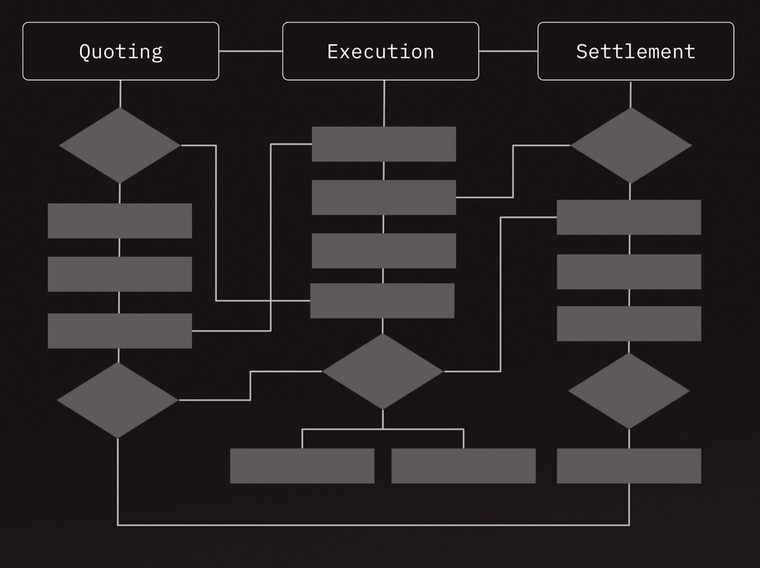
AI you can trust for complex supply chain operations
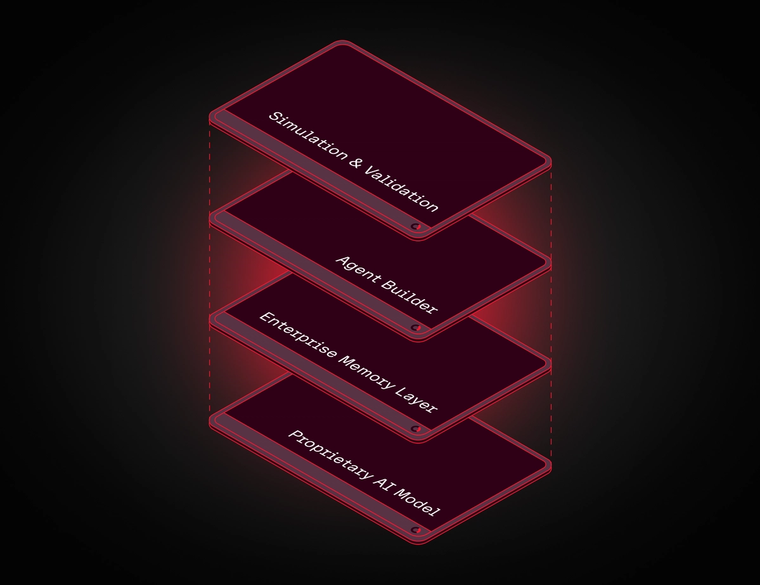
Today, we’re launching Pallet Core, which allows you to automate any supply chain operation from quote-to-cash with confidence. In practice, agents built with Pallet Core use your operating rules along with a proprietary AI model to run workflows accurately, so automation performs reliably in production at scale.
- A flexible agent builder orchestrates workflows across tasks, tool calls, and validation steps.
- The Enterprise Memory Layer encodes how your operation actually runs — customer rules, exceptions, operating judgment, tribal knowledge, so AI behaves consistently as complexity grows.
- Operations are powered by Pallet’s proprietary model, trained on licensed supply chain datasets. Pallet's model leads frontier models in speed and accuracy benchmarks.
- Reliability is maintained through thousands of simulations on synthetic data to validate accuracy and remove hallucinations.
Driving ROI for customers in production
Pallet Core is already running in production across supply chain operators like Mallory Alexander, Knight-Swift Transportation, Lineage Logistics, STG Logistics, and Prism Logistix. These teams use Pallet across both routine operations and the most complex, high-stakes parts of their business.
At Prism, Pallet runs more than 20 workflows across truckload, freight forwarding, intermodal, and hazmat operations. These are parts of the business where complexity is unavoidable, and mistakes are expensive. Shipment processing, invoice audits, hazmat and customs classification, and intermodal coordination all require precision across multiple systems. Errors surface quickly as rework, delayed billing, chargebacks, or compliance risk.
We have to decouple headcount growth from revenue growth, and the only way to do that is to accelerate AI. Pallet increases our operating margin by 10%.
David Radom
CEO Prism Logistix
Where we're headed next
Pallet is raising the bar for what AI can be trusted to run in production. We prioritize reliability in high-stakes workflows where accuracy, compliance, and customer experience are non-negotiable and support the customized or specialized operations that demand deep domain expertise.
To see Pallet in action, click here to book a demo.